
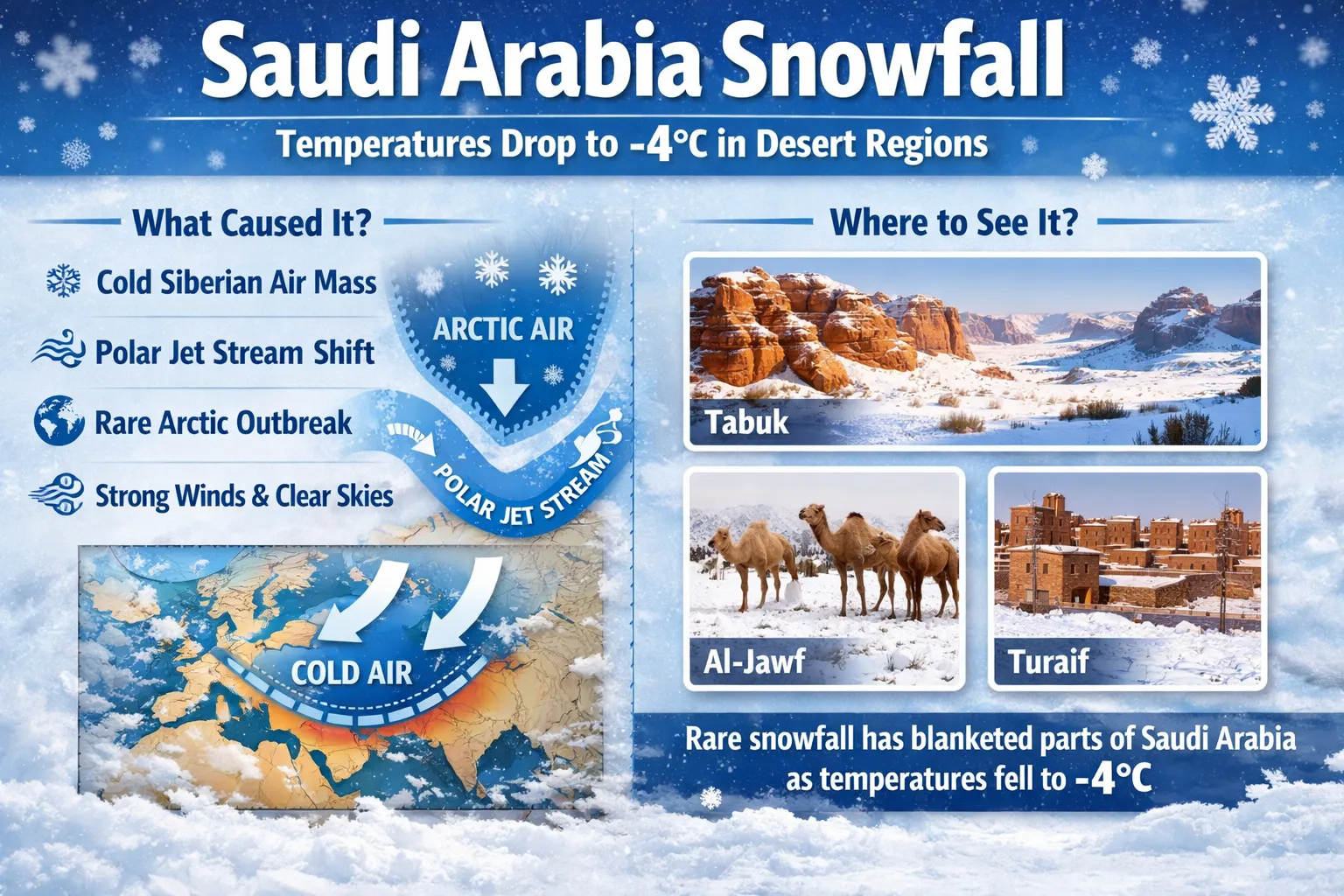
Saudi Arabia Snowfall: Why the Desert Is Snowing?
camels walking across ice-covered dunes, crimson sand meeting pristine white snow, and residents bundled in winter gear where temperatures typically soar past 50°C. This isn’t fiction. Saudi Arabia snowfall has become a stunning reality in 2024 and 2025, transforming the Kingdom’s northern regions into unexpected winter wonderlands.
The desert nation has witnessed multiple rare snow events recently. These breathtaking moments challenge everything we thought we knew about Arabian weather patterns and spark conversations about climate shifts across the Middle East.
Recent Snow Events: Desert Dreams Come True
November 2024: The Al-Jawf Historic Moment
On November 3, 2024, the Al-Jawf region experienced its first recorded snowfall. The Al-Nafūd desert woke to a blanket of white that locals had never seen before. Temperatures in this region can spike to 55°C, making the sudden frost truly surprising.
Social media exploded with images of this transformation. Residents captured videos of camels navigating icy terrain, children playing in the snow, and vast desert landscapes temporarily dressed in white.
Here’s what made this event remarkable:
- First documented snowfall in the Al-Jawf desert region
- Hailstorms accompanied by heavy rainfall
- Dormant valleys and riverbeds filled with flowing water
- Temperatures dropped dramatically from typical desert heat
- Wildlife and vegetation responded to the unexpected moisture
December 2025: Tabuk’s Winter Transformation
Fast forward to December 2025, and Saudi Arabia snowfall struck again. Jabal Al-Lawz in the Tabuk region saw heavy snowfall on December 17, 2025, with temperatures reaching -4 degrees Celsius.
The mountainous Trojena area, which reaches heights of 2,600 meters, became a popular destination. Thick fog covered the plateau while strong winds swept across snow-covered peaks. Locals and tourists rushed to witness this rare spectacle.
Al-Majmaah and Al-Ghat, north of Riyadh, also witnessed snowfall. This marked an extraordinary expansion of winter weather deeper into the Kingdom’s interior.
What Causes Snow in the Desert?
You might wonder how snow falls in one of Earth’s hottest regions. The answer lies in unusual weather patterns.
A low-pressure system over the Arabian Sea caused moisture-laden air to clash with residual desert warmth, producing thunderstorms and unprecedented snowfall.
Key factors include:
- Low-pressure systems from the Arabian Sea pushing northward
- Moisture-rich air meeting cold atmospheric conditions
- High-altitude regions providing the necessary elevation for snow formation
- Winter months (November to February) creating optimal conditions
- Strong winds carrying cold air masses across the region
The National Center for Meteorology monitors these patterns closely. They issue warnings when conditions favor extreme weather, helping residents prepare for sudden temperature drops and potential flooding.
Climate Change Connection: Reading the Signs
Does Saudi Arabia snowfall confirm climate change? Scientists urge caution about drawing conclusions from single weather events. However, these anomalies fit within broader climate disruption patterns.
The Kingdom experiences increasing weather extremes:
- Flash floods in traditionally dry regions
- Sudden temperature swings
- More frequent severe storms
- Unpredictable rainfall patterns
- Extended periods of unusual weather
Regional neighbors face similar challenges. Oman battles cyclones, Kuwait sets new heat records, and the UAE implements extensive weather modification programs. The entire Gulf Cooperation Council region confronts a new climate reality.
Where Snow Falls in Saudi Arabia
Northern Desert Regions
The Al-Jawf and Northern Borders provinces lead in snow occurrences. These areas, closer to Jordan and Iraq, experience more dramatic temperature variations than central or southern regions.
Mountain Highlands
Jabal Al-Lawz stands 2,580 meters above sea level. This “Almond Mountain” regularly sees winter precipitation at its highest elevations. Jabal Soudah in the Asir region also reports occasional snow or sleet.
The Tabuk mountains now attract winter tourism. Local businesses reported combined revenue of SAR 68 million from winter-related tourism activities. Visitors book snow-trail packages, photography safaris, and cultural excursions.
Urban Areas
Even cities experience the chill. Riyadh faced heavy rainfall and cooler temperatures during recent weather systems. Buraidah in Qassim witnessed moderate to heavy rainfall alongside snow reports from surrounding areas.
Planning Your Snow Adventure
Want to witness Saudi Arabia snowfall yourself? Here’s how to maximize your chances:
Timing
Visit between November and February. December and January offer the highest probability of snow events, particularly in northern and mountainous regions.
Locations to Target
- Jabal Al-Lawz (Tabuk Province)
- Trojena mountain area
- Al-Jawf region
- Northern Borders Province
- High-elevation areas near the Jordanian border
What to Pack
Saudi winter nights get brutally cold, especially at elevation. Bring layered clothing, warm jackets, and waterproof boots. Don’t forget your camera—these moments are once-in-a-lifetime.
Safety First
Monitor weather bulletins from the National Center for Meteorology. Roads become treacherous during snow events. Flash flooding poses risks in valleys and low-lying areas. Strong winds and reduced visibility create hazardous conditions.
Respect local customs and environmental sensitivities. These are delicate ecosystems experiencing unusual stress.
The Bigger Picture: Saudi Arabia’s Climate Story
Snow transforms more than landscapes. It reshapes how Saudis view their environment and future.
The Kingdom invested heavily in climate adaptation. Solar energy projects proliferate across the desert. Afforestation programs plant millions of trees. Water conservation initiatives address chronic scarcity.
Yet challenges remain. Can renewable energy investments keep pace with climate shifts? Will extreme weather events increase in frequency and severity? How should cities prepare for unpredictable precipitation?
Meteorologists warn that residents should expect increasingly severe weather. The National Center for Meteorology emphasizes preparedness for hailstorms, strong winds, and flash flooding.
What Happens After the Snow Melts?
The moisture brings unexpected benefits. Al-Jawf region anticipates flourishing spring seasons. Wild flora like lavender and chrysanthemum thrive on the unusual rainfall. Farmers welcome water for crops and livestock.
Valleys that remained dry for years suddenly flow with streams. Underground aquifers receive recharge from snow melt and rainfall. The desert ecosystem responds with remarkable resilience.
Looking Forward: Saudi Arabia’s White Future
Will Saudi Arabia snowfall become routine? Climate models suggest northern highlands may experience periodic snow through 2030 and beyond. The Tabuk region could establish itself as a permanent winter destination within the Gulf’s tourism portfolio.
This transformation represents more than weather curiosity. It signals environmental changes affecting the entire Arabian Peninsula. Regional cooperation on climate monitoring and response becomes increasingly critical.
The snow-covered desert whispers a message: our planet’s systems remain dynamic, unpredictable, and powerful. Saudi Arabia’s response to these changes will shape its environmental legacy for generations.
Frequently Asked Questions
How rare is snow in Saudi Arabia?
Extremely rare in most regions. Northern mountains occasionally see snow, but desert snowfall remains exceptional. The November 2024 Al-Jawf event marked the first recorded instance in that specific area.
Does it snow every winter in Saudi Arabia?
No. Snow requires specific atmospheric conditions that don’t occur annually. However, mountainous regions at high elevations experience more frequent winter precipitation than lowland deserts.
What’s the coldest temperature recorded during recent snowfall?
Temperatures dropped to -4 degrees Celsius in Jabal Al-Lawz during December 2025 snow events. Some high-elevation areas reported even lower readings.
Can tourists visit during snow season?
Yes. Tabuk Province and northern regions welcome visitors. Book accommodation early, as snow events create tourism surges. Check weather forecasts and road conditions before traveling.
Is Saudi Arabia snowfall evidence of climate change?
Single weather events don’t prove climate trends. Scientists study long-term data patterns to understand climate shifts. However, increasing weather extremes align with broader climate disruption predictions.
Reference Source