Chinese Drone Ban: What the US Decision Means for DJI Owners
The skies just got a lot more complicated for drone enthusiasts. On Monday, December 23, 2025, the Federal Communications Commission dropped a bombshell that will reshape the American drone market forever. If you’ve been eyeing that sleek new Chinese-made drone model, you might want to think again—because it’s not coming to the US anytime soon.
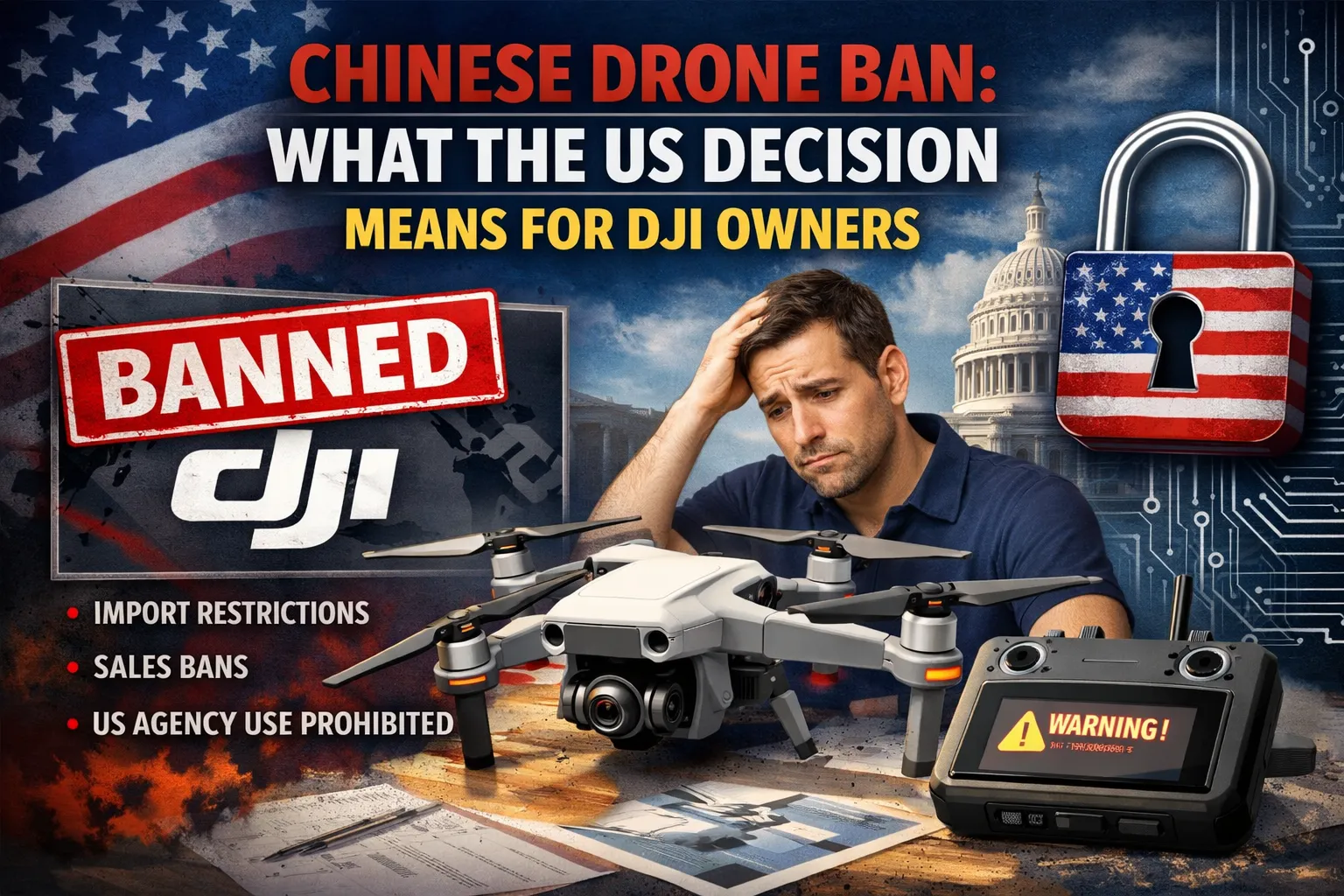
The FCC just banned all new foreign-made drones and their critical components from being imported or sold in the United States. This isn’t just bureaucratic red tape. This is a full-scale national security lockdown targeting the world’s dominant drone manufacturers, particularly Chinese giants like DJI and Autel Robotics.
Why This Ban Matters Right Now
Here’s the reality check: Chinese drones, especially those made by DJI, have dominated American skies for years. We’re talking about 70% of the global drone market under DJI’s control alone. From police departments tracking suspects to farmers monitoring crops, from firefighters assessing disaster zones to hobbyists capturing stunning aerial footage—Chinese drones have been everywhere.
The FCC added these foreign-made unmanned aircraft systems (UAS) to its “Covered List”—a designation reserved for equipment deemed to pose serious national security risks to the United States. Translation? The government believes these drones could be used for surveillance, data theft, or worse.
👉 Also Read : China Reveals Record-Breaking Undersea Gold Find Beneath Asian Water
What Exactly Did the FCC Ban?
Let’s break down what this decision actually means. The ban targets:
- All new drone models from foreign manufacturers
- Critical drone components from countries including China
- Future imports and sales of these devices
- Equipment from major manufacturers like DJI and Autel Robotics
Here’s the silver lining: if you already own a Chinese-made drone, you’re safe. The ban doesn’t apply to models already approved for sale or currently in use. You can keep flying your existing DJI Mavic or Phantom without any legal issues. The FCC emphasized that consumers can continue using any drones they legally purchased before this ruling.
But don’t expect to upgrade to the latest model anytime soon.
The National Security Argument
The FCC didn’t make this decision lightly. According to the agency, allowing foreign-made drones and their components to flood the American market creates multiple security vulnerabilities. The commission warned that these devices:
- Undermine the resilience of America’s drone manufacturing base
- Increase risks to national airspace security
- Create potential vectors for large-scale attacks during major public gatherings
With the 2026 World Cup and 2028 Summer Olympics in Los Angeles on the horizon, officials are taking no chances. The FCC stated bluntly that criminals, terrorists, and hostile foreign actors have weaponized these technologies, creating serious threats to American homeland security.
👉 Also Read : Saudi Arabia Wants to Host the World’s Cheapest Data Centres
DJI Fires Back: “Show Us the Evidence”
DJI, the Chinese drone manufacturer at the center of this controversy, isn’t taking this lying down. The company expressed deep disappointment with the FCC’s decision and raised pointed questions about the process.
Adam Welsh, DJI’s Head of Global Policy, has been writing letters to American officials for months, including Defense Secretary Pete Hegseth. His message? We’re ready to be transparent. We welcome scrutiny. Just show us what we’re accused of doing wrong.
The problem, according to DJI’s spokesperson, is that no evidence has been made public. The FCC based its ban on a determination by a White House interagency body that concluded foreign drones could enable persistent surveillance, data theft, and destructive operations over US territory. But DJI argues these concerns aren’t grounded in actual evidence—they’re protectionist measures designed to shield American manufacturers from competition.
“Concerns about DJI’s data security have not been grounded in evidence and instead reflect protectionism, contrary to the principles of an open market,” a DJI spokesperson told CNN.
China’s Response: “Discriminatory and Unfair”
Beijing isn’t happy either. Lin Jian, spokesperson for the Chinese foreign ministry, called the FCC’s listing discriminatory on Tuesday. He accused Washington of overgeneralizing national security concerns and demanded that the US correct its approach.
“The US should correct its erroneous practices and provide a fair, just, and non-discriminatory environment for Chinese companies to operate,” Lin stated.
This isn’t the first time Chinese tech companies have faced American regulatory pressure. Huawei and ZTE, both telecom giants, already sit on the FCC’s Covered List for similar national security concerns. The pattern is clear: Washington is systematically cutting Chinese technology companies out of the American market.
The Long Road to This Ban
If you think this ban came out of nowhere, think again. Concerns about Chinese drones have been building for nearly a decade.
The timeline tells the story:
2017: The US Army banned DJI drones due to cybersecurity vulnerabilities. That same year, the Department of Homeland Security warned in an internal memo that Chinese-made drones might be sending sensitive flight data back to manufacturers in China.
2021: The US Treasury Department placed investment restrictions on DJI for similar reasons.
2022: The Department of Defense added DJI to its list of firms allegedly working with China’s People’s Liberation Army. DJI sued to get removed from that list but lost the court battle in September 2024.
Last year’s National Defense Authorization Act mandated a security review of equipment produced by DJI, Autel, and other foreign drone makers, with a deadline of December 23, 2025. The FCC’s announcement this week is the culmination of that legislative requirement.
👉 Also Read : Deadline Nears for AT&T Data Breach Settlement: How to File a Claim Before It’s Too Late
What This Means for American Drone Users
The impact of this ban will ripple across multiple sectors. Law enforcement agencies that rely on Chinese drones for surveillance and search-and-rescue operations will need to find alternatives. Farmers who use DJI drones for crop monitoring face the same challenge. Real estate agents, filmmakers, construction managers, infrastructure inspectors—all will feel the effects.
The good news? This could be a massive opportunity for American drone manufacturers. Arthur Erickson, CEO and co-founder of Texas-based drone company Hylio, told the Associated Press that DJI’s departure will create space for domestic companies to grow. New investments are flowing in to help boost production of American-made drones, which could eventually bring prices down.
The FCC didn’t just target Chinese manufacturers—it banned ALL foreign-made drones and components. That creates complications for the global supply chain that even American companies rely on.
“The way it’s written is a blanket statement,” Erickson said. “There’s a global-allied supply chain. I hope they will clarify that.”
Trump’s Push for American Drone Dominance
This ban aligns perfectly with President Donald Trump’s broader agenda. In June 2025, Trump signed an executive order designed to accelerate the commercialization of drone technologies and scale up domestic drone production. The goal? Prevent foreign control or exploitation of American airspace.
FCC Chair Brendan Carr emphasized this point on social media Monday: “President Trump has been clear that his Administration will act to secure our airspace and unleash American drone dominance.”
The House Select Committee on the Chinese Communist Party praised the FCC’s decision, calling it a move that will safeguard national security and protect Americans. The committee noted that when combined with the administration’s recent executive actions to accelerate domestic drone commercialization, this ban sends an unmistakable signal: the US is open for drone innovation—and American manufacturing will be rewarded.
The Path Forward: Uncertainty and Opportunity
So where do we go from here? For consumers, the immediate impact is clear: no new Chinese drone models will hit US shelves. Your current drone is fine, but when it’s time to upgrade, you’ll be looking at different options.
For American manufacturers, this represents a golden opportunity. With the dominant market player effectively blocked, domestic companies can step up to fill the void. The challenge will be matching the combination of quality, features, and price that made Chinese drones so popular in the first place.
For the drone industry as a whole, questions remain. Will the FCC clarify exactly which foreign components are banned? How will this affect American companies that rely on international supply chains? And perhaps most importantly: will this actually make America more secure, or will it simply hand market dominance to another foreign competitor?
The FCC’s decision marks a turning point in the ongoing tech war between the United States and China. As tensions escalate and national security concerns intensify, we’re likely to see more restrictions on Chinese technology across multiple sectors.
What You Should Do Next
If you’re a drone owner or considering buying one, here’s your action plan:
If you already own a Chinese-made drone: Relax. You’re in the clear. The ban doesn’t affect existing drones, and you can continue flying legally.
If you’re planning to buy a drone: Research American and allied manufacturers now. Your options have just narrowed significantly for future purchases.
If you’re a business that relies on drones: Start planning your transition strategy. Whether you run a real estate business, agricultural operation, or public safety department, now is the time to explore domestic alternatives.
If you’re an investor: Watch the American drone manufacturing sector closely. Companies like Hylio and others could see significant growth as they fill the gap left by Chinese manufacturers.
The drone market is about to change dramatically. The question isn’t whether this will affect you—it’s how you’ll adapt to the new reality. The skies above America are entering a new era, and only time will tell whether this ban makes us safer, or just makes our drones more expensive.
Frequently Asked Questions About the Chinese Drone Ban
Yes, you can absolutely still fly your existing DJI drone. The FCC ban only affects new drone models that haven’t been approved yet—it doesn’t touch drones already sold in the United States. If you legally purchased your Chinese-made drone before December 23, 2025, you’re completely in the clear. You can continue using it for personal or professional purposes without any legal concerns. The restriction only prevents new Chinese drone models from entering the US market moving forward, so hold onto your current device if it’s working well for you.
The US government banned new Chinese drones due to serious national security concerns. Federal agencies believe these devices could enable persistent surveillance, steal sensitive data, and potentially support destructive operations over American territory. The FCC specifically worried that foreign-made drones undermine America’s domestic drone manufacturing industry and create risks to national airspace, especially during major events like the upcoming 2026 World Cup and 2028 Olympics. While DJI disputes these claims and says no evidence has been publicly shared, US officials point to a pattern of concerns dating back to 2017, including alleged connections to China’s military and human rights abuses in Xinjiang.
You can buy American-made drones from companies like Hylio, Skydio, and other domestic manufacturers that focus on various applications from agricultural spraying to professional photography. Several US-based companies are rapidly expanding production to fill the gap left by Chinese manufacturers. You can also purchase drones from allied countries, though the FCC’s blanket restriction on foreign drones may require clarification on which international brands remain available. Your best bet right now is to research American drone manufacturers that specialize in your specific needs—whether that’s farming, real estate photography, construction inspection, or recreational flying. Prices may be higher initially, but domestic options are becoming more competitive as production scales up.
No, your DJI drone will not stop working in the United States. The ban doesn’t affect the functionality of existing drones or prevent you from using them. You can continue flying your current DJI device, and it will operate exactly as it did before the announcement. However, you may face challenges with future software updates, replacement parts, and warranty support as the regulatory environment evolves. DJI can still provide updates for existing models, but the company’s ability to sell new products in the US market has been severely restricted. If your drone breaks down or becomes obsolete, you’ll need to look at American or allied manufacturers for your next purchase rather than upgrading to a newer DJI model.
Reference