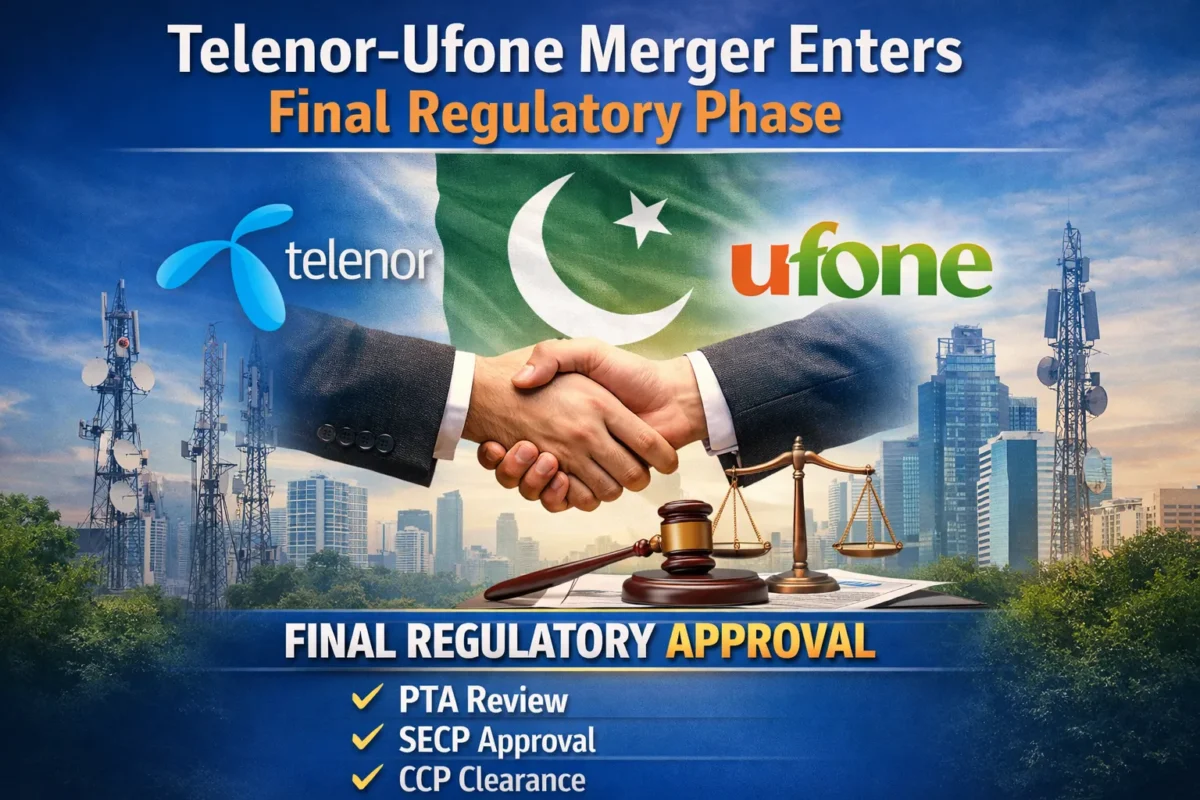
Telenor-Ufone Merger Enters Final Regulatory Phase
PTCL has formally submitted its merger application to the Pakistan Telecommunication Authority. This filing marks a critical step toward combining Telenor Pakistan and Ufone into a single powerhouse entity. The move will reshape the entire Pakistani telecom landscape and create the country’s second-largest mobile operator.
Regulators now hold the keys to approving this historic consolidation. Once approved, the merged company will command approximately 70 million subscribers. This positions the new entity directly behind Jazz, Pakistan’s current market leader with 74 million users.
What Happens Next for Telenor and Ufone Users
PTCL completed its acquisition of Telenor Pakistan on December 31, 2025. The company paid Rs108 billion for 100% of Telenor Pakistan and Orion Towers. Both now operate as wholly-owned PTCL subsidiaries alongside Ufone and U Microfinance Bank.
Telenor Pakistan continues to function as a separate legal entity during this transition phase. The company maintains its brand identity and serves its 43 million customers independently. Integration with Ufone will only proceed after PTA grants final approval and the Islamabad High Court gives its blessing.
Officials expect the integration process to take 5-6 months once approvals come through. During this period, both networks will maintain their existing services. Customers will see gradual changes as systems merge and networks consolidate.
Also Read : Telenor and Vodafone Announce Strategic Procurement Partnership
MergeCo Will Redefine Market Competition
The combined entity, dubbed “MergeCo,” will dramatically alter Pakistan’s telecom hierarchy. PTCL brings Ufone’s 27 million subscribers to the table. Adding Telenor’s 43 million creates a formidable competitor that will control roughly 35% of Pakistan’s mobile market share.
This consolidation pushes China Mobile-owned Zong into third place with its 52 million subscribers. Jazz maintains its lead but faces intensified competition from a much stronger second-place rival. Market observers predict this will trigger aggressive pricing strategies and service improvements across all operators.
The merged company will combine Telenor’s strength in rural and northern areas with Ufone’s solid urban and southern coverage. This creates truly nationwide reach that neither operator achieved independently. Infrastructure consolidation will also generate substantial cost savings through shared tower networks.
Strict Conditions Protect Fair Competition
Regulators attached stringent conditions to protect market competition and consumer interests. The Competition Commission of Pakistan approved the deal in October 2025 after extensive review. However, approval came with numerous safeguards designed to prevent monopolistic practices.
PTCL and MergeCo must maintain completely separate boards of directors. No individual can simultaneously serve on both entities or hold senior management roles in each. Former executives face a three-year cooling-off period before joining the other organization.
The companies must keep detailed separate accounts for all business units. Cross-subsidization between PTCL and MergeCo remains strictly prohibited. A third-party evaluator will monitor compliance and submit quarterly reports to regulators for five years.
Pricing structures require PTA approval, particularly for wholesale services including IP bandwidth, long-distance international services, and domestic leased lines. PTCL cannot engage in predatory pricing or exclusive deals that prevent other operators from accessing network capacity. All operators must receive non-discriminatory access to PTCL infrastructure under approved Reference Interconnect Offers.
According to sources at Developing Telecoms, these conditions follow the Competition Commission’s earlier requirements. Regulators aim to ensure consumers benefit through better services and competitive pricing rather than market concentration.
Also Read : Why PTCL Delays Are Stalling the Telenor Merger
The Road to This Moment Was Anything But Smooth
PTCL faced numerous obstacles securing regulatory approval for this transaction. The Competition Commission of Pakistan revealed in September 2025 that PTCL’s administrative lapses repeatedly stalled progress. The company failed multiple times to submit required investment plans and efficiency projections.
PTCL’s practice of challenging PTA regulations in court created additional complications. The company obtained stay orders against several regulatory decisions, including Significant Market Power determinations. This left PTA without oversight on PTCL’s tariffs charged to other telecom operators.
The CCP raised serious concerns about PTCL’s transparency and business conduct. Regulators noted discrepancies in data related to international direct dialing services. They also highlighted risks from PTCL’s failure to maintain separate accounting for Ufone operations, which created cross-subsidization opportunities.
Despite these challenges, PTCL ultimately secured approvals by agreeing to all regulatory conditions. CCP Chairman Dr. Kabir Ahmed Sidhu called the transaction “one of the most complicated in the entire world.” He emphasized that attached conditions specifically target preventing favoritism, predatory pricing, and barriers to market entry.
Financial Stakes and Strategic Implications
PTCL secured $400 million in debt financing from a consortium led by the International Finance Corporation to fund the Telenor acquisition. The World Bank’s private sector arm helped structure this financing package. This substantial debt load raises questions about PTCL’s ability to pursue aggressive spectrum bidding in upcoming 5G auctions.
The merged entity must demonstrate profitability under CCP conditions. This represents a significant challenge given Ufone’s history of consistent losses. PTCL currently absorbs all Ufone losses, which pushed PTCL itself into a Rs14 billion loss position in 2024.
However, the deal potentially transforms PTCL’s revenue picture. PTCL reported Rs219.7 billion in revenues during 2024. Telenor Pakistan posted Rs123 billion in the same period. Simple combination suggests over 50% revenue growth for the merged entity.
Hatem Bamatraf, President and Group CEO of PTCL and Ufone, expressed optimism about participating in Pakistan’s upcoming 5G spectrum auction. He indicated the merged entity will bid for spectrum to expand bandwidth and roll out next-generation services. However, questions remain about how aggressively PTCL can bid given its new debt obligations and broader industry concerns about spectrum pricing.
As reported by Dawn, Pakistan’s telecom sector showed robust growth in 2024-25. Total revenues exceeded Rs1 trillion, marking 12% year-over-year growth. Subscribers crossed 200 million while broadband users topped 150 million. Data usage surged to 27,727 petabytes.
Yet challenges persist across the industry. PTA official Naveed Butt pointed out that high electricity costs and dollar-linked government payments continue straining operator margins despite revenue growth. These structural challenges will affect MergeCo’s profitability prospects regardless of scale advantages.
What This Means for Pakistani Telecom Consumers
Market consolidation from four major operators to three raises concerns about reduced competition. However, regulatory safeguards aim to maintain competitive pressure and protect consumer interests. The CCP specifically designed conditions to ensure claimed efficiencies benefit consumers through improved services and competitive pricing.
Telenor Pakistan’s new Acting CEO Awais Vohra, a founding member of the company’s launch team and former Chief Technology Officer, will guide operations during the transition. PTCL Group CEO Hatem Bamatraf assured Telenor employees that the merger will not result in job losses. He emphasized talent retention and adopting best practices from both organizations.
The combined network infrastructure promises expanded coverage and improved service quality. Telenor’s strong northern and rural presence complements Ufone’s urban and southern footprint. Tower consolidation eliminates redundant infrastructure while improving signal quality in previously weak areas.
MergeCo’s enhanced scale positions it to invest more aggressively in 5G technology and network modernization. Larger subscriber base and revenue stream provide resources for infrastructure upgrades that smaller operators struggle to finance independently.
Senate Standing Committee on IT and Telecom Chairperson Palwasha Khan welcomed the CCP decision while emphasizing oversight responsibility. She noted that as a state-owned entity, PTCL requires careful monitoring to safeguard public interest. The committee will demand quarterly MergeCo accounts to ensure profitability.
This consolidation represents a turning point for Pakistan’s digital economy. The timing coincides with Pakistan’s preparation for 5G rollout, potentially accelerating next-generation service deployment across the country.
Timeline and Next Steps
PTA now reviews PTCL’s merger application following this January 26, 2026 filing. The regulator will assess whether the proposed integration meets all required conditions and serves consumer interests. PTA approval remains essential before any operational integration can proceed.
The Islamabad High Court must also grant approval before integration moves forward. Legal review ensures the merger complies with all applicable laws and regulations. This judicial oversight provides additional consumer protection beyond regulatory approvals.
Once both approvals arrive, operational integration will begin. Companies will consolidate billing systems, customer service platforms, and network management operations. Technical teams will merge network infrastructure while maintaining service continuity for all subscribers.
The entire process could extend well into late 2026 or early 2027 depending on regulatory timelines and technical implementation challenges. Both companies must maintain separate operations and service quality throughout this extended transition period.
Frequently Asked Questions
When will Telenor and Ufone officially merge into one company?
PTCL filed the merger application with PTA on January 26, 2026. The integration will take 5-6 months after PTA and Islamabad High Court approvals. Telenor Pakistan currently operates as a separate PTCL subsidiary. Full integration likely completes in late 2026 or early 2027 depending on regulatory approval timelines.
How many subscribers will the merged Telenor-Ufone entity have?
The combined entity will serve approximately 70 million subscribers. Telenor Pakistan brings 43 million customers while Ufone contributes 27 million users. This creates Pakistan’s second-largest mobile operator behind Jazz, which currently serves 74 million subscribers. The merged company will control roughly 35% of Pakistan’s mobile market share.
Will Telenor and Ufone customers lose service during the merger?
No service disruptions are expected during the transition period. Both networks will continue operating independently until full integration receives regulatory approval. PTCL committed to maintaining service quality and meeting all license obligations throughout the process. The PTA specifically required continuity of services as a condition for approving the acquisition.
What happens to Zong after the Telenor-Ufone merger?
China Mobile-owned Zong drops to third place in Pakistan’s mobile market. Zong currently serves 52 million subscribers. The merged Telenor-Ufone entity will leapfrog Zong with 70 million combined subscribers. This intensified competition may trigger aggressive pricing and service improvements across all operators as they compete for market share.