Ericsson and SK Telecom Sign 6G MoU — And the Deal Runs All the Way to 2031
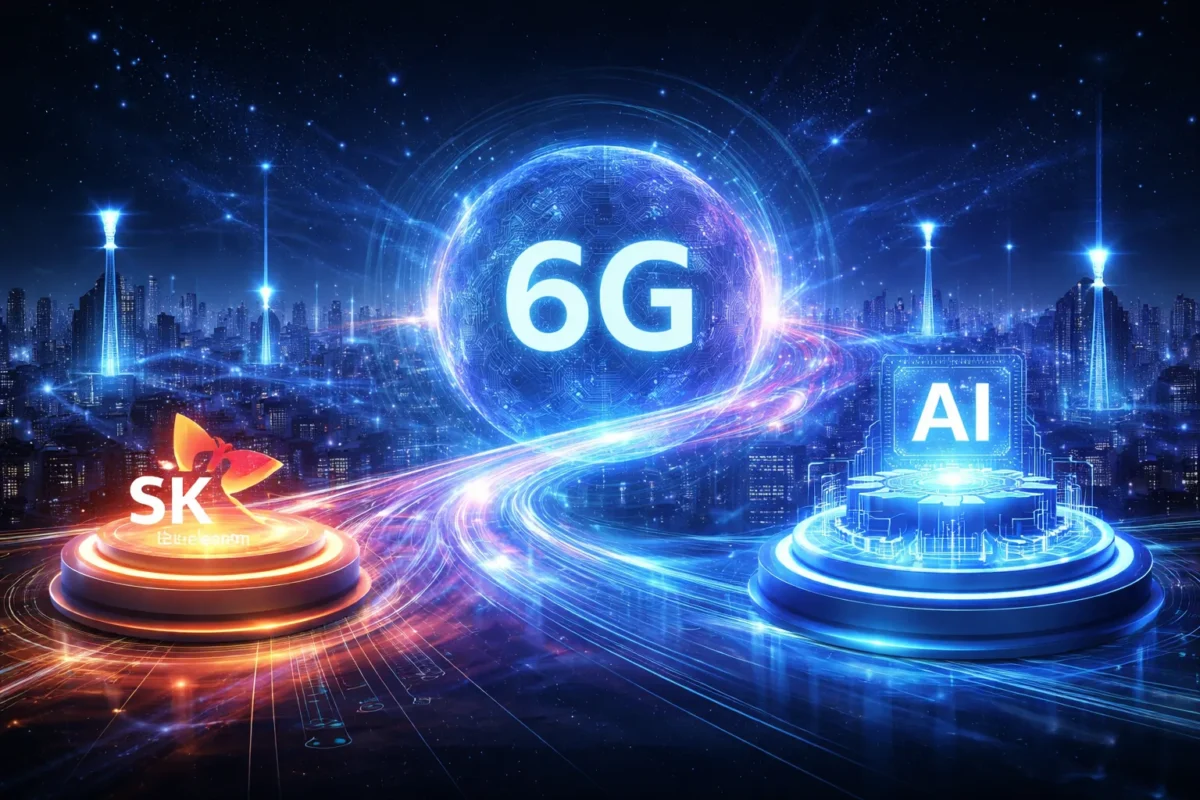
SK Telecom (NYSE: SKM) and Ericsson (NASDAQ: ERIC) have signed a Memorandum of Understanding to strengthen their collaboration on mobile network technologies spanning 5G to future 6G. The agreement commits both companies to joint research and development efforts through March 2, 2031 — a six-year runway that signals serious long-term ambition for next-generation connectivity.
The telecom industry has talked about 6G for years, but this deal turns conversation into structured action. For network operators, enterprises, and technology investors tracking the race to define global 6G standards, this MoU outlines exactly where two of the sector’s most capable players will spend the next half-decade.
What the MoU Actually Covers
The agreement targets five key technology areas, each designed to push current 5G infrastructure further while simultaneously laying the groundwork for 6G.
AI-Powered Radio Access Networks (AI-RAN)
At the center of the deal sits AI-RAN — networks that autonomously learn, predict, and optimize channel conditions in real time. SKT and Ericsson will work together to develop RAN systems that manage resources more efficiently, boost security, and cut energy consumption. These are not incremental upgrades; the goal is to build networks that think for themselves.
5G Advancements and Monetization
The two companies will also focus on unlocking new business opportunities within existing 5G infrastructure. That means enabling next-generation services and creating revenue streams that justify the massive capital operators have already invested in 5G rollout.
Open and Autonomous Networks
In multi-vendor environments — a reality for virtually every major operator — managing operational efficiency becomes complex. The partnership targets automation technologies that improve productivity and streamline operations across these mixed-vendor ecosystems.
End-to-End Security on Zero Trust Architecture
Security runs through every layer of the agreement. Both companies will build end-to-end protection on a zero trust architecture with continuous monitoring, delivering stronger real-time threat detection and response across both 5G Advanced and 6G environments.
6G Standardization and Future Technologies
The forward-looking pillar of the MoU covers spectrum strategy, extreme MIMO evolution, energy efficiency, and Integrated Sensing and Communication (ISAC) — technologies that form the technical backbone of what 6G will eventually become.
Also Read : AT&T Wins Americas Wireless Crown for 17th Straight Year — And the Numbers Explain Why
What the Executives Said
“Our collaboration with Ericsson will be a core engine propelling the evolution of AI-powered networks, paving the way toward 6G. Through research focused on global standardization and real-world validation, we aim to secure world-class technological leadership in AI-powered network evolution and 6G.”
— Yu Takki, Head of Network Technology Office, SK Telecom
“We are pleased to deepen our partnership with SK Telecom to accelerate AI-powered RAN, 5G monetization, open autonomous networks and zero-trust security — while laying the groundwork for AI-native 6G. Together we will move rapidly from standards and trials to commercial solutions that boost performance, energy efficiency and security — strengthening South Korea’s leadership in next-generation connectivity.”
— Marten Lerner, Head of Networks Strategy and Product Management, Ericsson
Why This Deal Matters Beyond Korea
South Korea has a track record of leading the world in network deployment — it was among the first markets to launch commercial 5G at scale. The SKT-Ericsson agreement positions the country to repeat that feat with 6G. But the implications stretch further than national prestige.
The standards emerging from this collaboration will influence how 6G networks get built globally. By combining SKT’s real-world network environment with Ericsson’s global R&D depth, both companies gain a feedback loop that pure research labs cannot replicate. Trials run on live networks produce data that shapes standards — and standards shape the entire industry.
The inclusion of ISAC in the research agenda is particularly notable. Integrated Sensing and Communication allows a single network to simultaneously carry data and sense its physical environment — a foundational capability for applications ranging from autonomous vehicles to industrial automation. Getting ISAC right at the standardization stage matters enormously for what 6G ultimately delivers.
Also Read : Telecom Stocks Beat the Market in 2026 — and Analysts Say They Still Look Cheap
The Path from MoU to Commercial Deployment
Both parties describe the MoU as a framework for ongoing technology evolution — not a one-time announcement. The structure enables practical deployment of innovations in the 5G era while building long-term 6G research and standardization in parallel.
That dual-track approach reflects how network evolution actually works. Operators cannot wait for 6G to solve today’s network challenges. AI-RAN improvements and open network automation deliver real value now, while the deeper 6G standardization work continues in the background. The MoU runs both tracks simultaneously.
The effective date of March 2, 2031 gives the partnership a clear horizon and creates accountability. Both Ericsson and SK Telecom have publicly committed to deliverables — joint exploration, validation, and potential commercialization of the technologies covered under the agreement.
Also Read : Broadcom Stock Could Surge 91% — Here Is Why Analysts Say Buy Before It Hits $3 Trillion
Frequently Asked Questions
Q1: What did SK Telecom and Ericsson agree to in their new MoU?
SK Telecom and Ericsson signed a Memorandum of Understanding on March 19, 2026, committing to joint R&D and network trials through March 2, 2031. The agreement covers AI-powered RAN, 5G monetization, open and autonomous networks, zero trust security, and 6G standardization. Both companies aim to move from research and standards into commercial network solutions that boost performance, energy efficiency, and security.
Q2: What is AI-RAN and why does it matter for 6G?
AI-RAN stands for AI-powered Radio Access Networks. These networks autonomously learn channel conditions, predict interference, and optimize performance in real time — without waiting for human input. They improve spectrum efficiency, cut energy consumption, and strengthen security. For 6G, AI-RAN is foundational: it shifts networks from reactive systems to intelligent infrastructure that adapts continuously. SKT and Ericsson place AI-RAN at the center of their joint research agenda because it bridges current 5G performance gains with the AI-native architecture 6G will require.
Q3: How long does the Ericsson and SK Telecom partnership last?
The MoU runs until March 2, 2031 — giving both companies a six-year framework for joint exploration, technology trials, and potential commercial deployment. The timeline covers both near-term 5G enhancements and longer-term 6G research and standardization work.
Q4: What is Integrated Sensing and Communication (ISAC) and why does it appear in the 6G roadmap?
ISAC allows a single network to carry data and simultaneously sense its surrounding physical environment. Instead of separating communication and sensing into different systems, ISAC combines both functions on the same spectrum and infrastructure. For 6G, this capability unlocks use cases like autonomous vehicles, smart manufacturing, and environmental monitoring — all without deploying separate sensor networks. SKT and Ericsson include ISAC in their 6G standardization work because getting the technology right at the standards stage determines how broadly it deploys across the industry.
Reference Sources
- SK Telecom Official Newsroom: https://news.sktelecom.com/en/2854
- TelecomLead: https://telecomlead.com/6g/sk-telecom-and-ericsson-accelerate-6g-innovation-with-ai-powered-network-collaboration-125175
- The Korea Herald: https://www.koreaherald.com/article/10698159
- Mobile World Live: https://www.mobileworldlive.com/ericsson/skt-ericsson-partner-on-6g-softbank-claims-efficiency-gains
- TechAfrica News: https://techafricanews.com/2026/03/19/ericsson-and-sk-telecom-deepen-partnership-on-ai-powered-5g-and-future-6g-networks/
- Original Reference: https://www.telecoms.com/5g-6g/ericsson-and-sk-telecom-team-up-for-ai-ran-and-6g-r-d